Monday, September 29, 2014

Animal Morph Journal Entry


Journal Entry 2

1.       View all of the animal’s created by the class.  Which image successfully represents the merging of two different species in a seamless manner?  

2.       View your own work.  What do you think is successful and why?  Is there room for improvement? If so what would you improve?


Sunday, September 28, 2014

What is Surrealism?

Designing for the Web

Surrealistic works of art create a dream-like environment. To learn more about this art movement research this intriguing style of art...then start thinking about an image you can create in Photoshop.  Complete the following journal entry on Surrealism and view previous student work for inspiration.


Created by Luke S

Created by Tim O.
Created by Brandon M.

Monday, September 22, 2014


 Calliope, our amazing student literary magazine, is in need of some CREEPY or seasonal art (for those that don't feel like being creepy or spooky).  Create a work of art out of any medium and submit photos of your work to Mr Matthiessen.   I will be happy to take photographs of your artwork if I receive it by September 29th.

All of my classes will get extra-credit for any quality artwork that is created for submission.
DEADLINE FOR SUBMISSIONS September 29th

Create Music with your Writing!

This exercise from Josten's Digital Classroom really illustrates the importance of variety in sentence structure. You will be required to complete this exercise by  Wednesday September 24th.                                
Write narratives to develop real or imagined experiences or events using effective techniques, well-chosen details, and well-structured event sequences.

 “This sentence has five words. Here are five more words. Five-word sentences are fine. But several together become monotonous. Listen to what is happening. The writing is getting boring. The sound of it drones. It’s like a stuck record. The ear demands some variety. Now listen. I will vary the sentence length, and I create music. Music. The writing sings. It has a pleasant rhythm, a lilt, a harmony. I use short sentences. And I use sentences of medium length. And sometimes, when I am certain the reader is rested, I 
will engage him with a sentence of considerable length, a sentence that burns with energy and builds with all the impetus of a crescendo, the roll of the drums, the crash of the cymbals — sounds that say listen to this, it is important.” — Gary Provost

Considering this quote, write about the photo of students racing to their lockers. Then, reread your work and try to vary your sentence length. Edit your work, considering not only punctuation and grammar, but also descriptive detail and sequence.


(from Jostens Digital classroom)

Wednesday, September 17, 2014

    Creative “Slab”    
                          
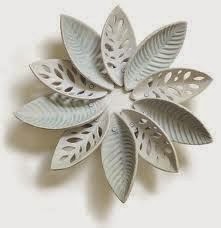
This lesson will require you to build and embellish a bowl, vase, or cup made from a slab.    BE CREATIVE and EXPERIMENT with techniques that you aren’t familiar with.   We don’t want the same old slab! 


  • This first step in this lesson is to find inspiration! Sights like Pinterest and Etsy will have examples of beautiful pottery created using slabs.  Print out the picture you are using for inspiration AND locate a tutorial on the way the piece was made.  If there isn’t any tutorial available, how else can you figure out how to make the piece?  Write the steps needed to create the piece.  Put all of this information in your sketchbook. 


  • Draw a sketch of the piece you are going to create.   This will be a graded sketchbook assignment.  Review the sketchbook rubrics.  Include Elements and Principles of design, size, color...etc.


REFLECTION

Advanced Ceramics

Sketchbook Entry:

Between construction and glazing take a few minutes to view your work.  Review the vocabulary words and write a brief reaction to the stage you are at in this project. Draw a picture of what your artwork looks like and DESCRIBE it. 

Also  answer the following questions:


                How  and why has my piece changed since the initial sketch?

·                          What do I like most and least about my piece?

·                          What  did I have the most difficulty with during construction?


Monday, September 15, 2014

Designing for the Web

There are tools in Photoshop that can make elephant skin look like lizard skin. In this lesson you will delve deeper into the magic of photoshop. Take a look at your next lesson to find out more.

Friday, September 12, 2014

Advanced Ceramics

The four steps to critique are describe, analyze, interpret, and evaluate. 
We will be critiquing our own artwork, as well as, some famous works of art as the semester continues.  This critique is your first for the semester and will not be counted as a grade. We will learn more about critiquing as the course continues. 

When critiquing a ceramic piece it is helpful to be able to view the piece on all sides.  I have brought a piece in for you to critique so you can see the piece close up.  Below are pictures of the piece.  

Do your best to:

  1. Describe what you see objectively. 
  2. Analyze the technical elements.
  3. Interpret what the artist is saying or wanting to relate with the piece (personal opinion).
  4. Evaluate the work of art you see.