Friday, December 20, 2013

Calliope Winter Issue...

Over the break create some sketches or mixed-media piece for Calliope. 
 The theme could be winter or Valentines Day. 
 Submissions will be due to Mrs. Kaiser not later than January 9th. 


Monday, December 16, 2013

SKY meets land

Here are some stellar examples of acrylic land and seascapes painted by students in the Advanced Drawing & Painting class.  Students used impasto and glazing techniques to create depth and translucency in their work. 
 Congratulations artists they are beautiful!


Cassidy Murphy

Jamie Hershman

Quinn Bohan

Sara-Jean Yanac

Emily Hardy


Friday, December 6, 2013

MIXED-MEDIA sketchbook


Intro Drawing and Painting


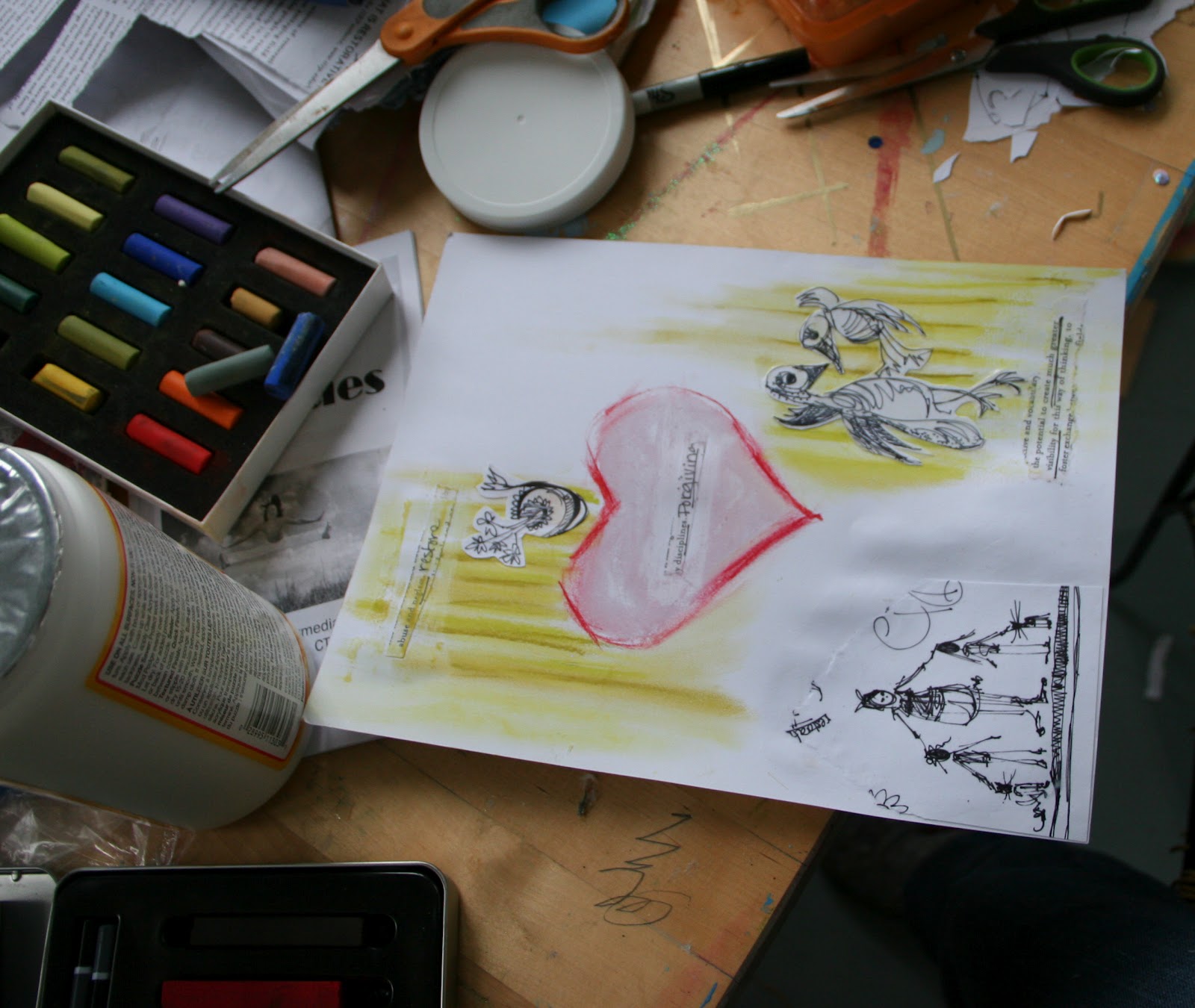
At a recent teacher workshop I was given a hand-out that contained a lot of information.  As the speaker presented I was looking over the hand-out and spotted words that resonated with me.  I underlined these words, drew designs around them, and began to doodle pictures that came to mind.  My doodling helped me better understand what the speaker was trying to get across and I was inspired to create a collage.  I first ripped and cut the words out from the hand-out then I used mod-podge (acrylic gel medium) to glue them to Bristol board.  I then began to layer pastels, mixing them with mod-podge.  The piece was spontaneous, like a doodle. Try this for a sketchbook assignment-you can add photographs, use marker, pastel, ink...etc.  Over the next week think about words your hear or see…maybe you will be inspired by words in a song or during a lecture in school. 

You will be creating a work of art that has a theme.  The theme will be up to you. This piece should have colored pencil and/or pastel pencil,  typed words, written words, pencil and/or ink. Photograph from a magazine. You should compose all the elements in your  piece so that the eyes flow from one area to the next.  How do you do this?  Maybe the corner of one element points another.  Or you can place similar colors around the piece so your eye jumps from place to another.  MOVEMENT is an important principle of design. We want it in this piece.  ALSO think about texture.  How can words make texture?  How does the use of different media create an interesting work of art?  How do you create balance in this piece?  Think about it, but not to much you want to have fun and let the creative juices flow. 


A book I find inspirational is:
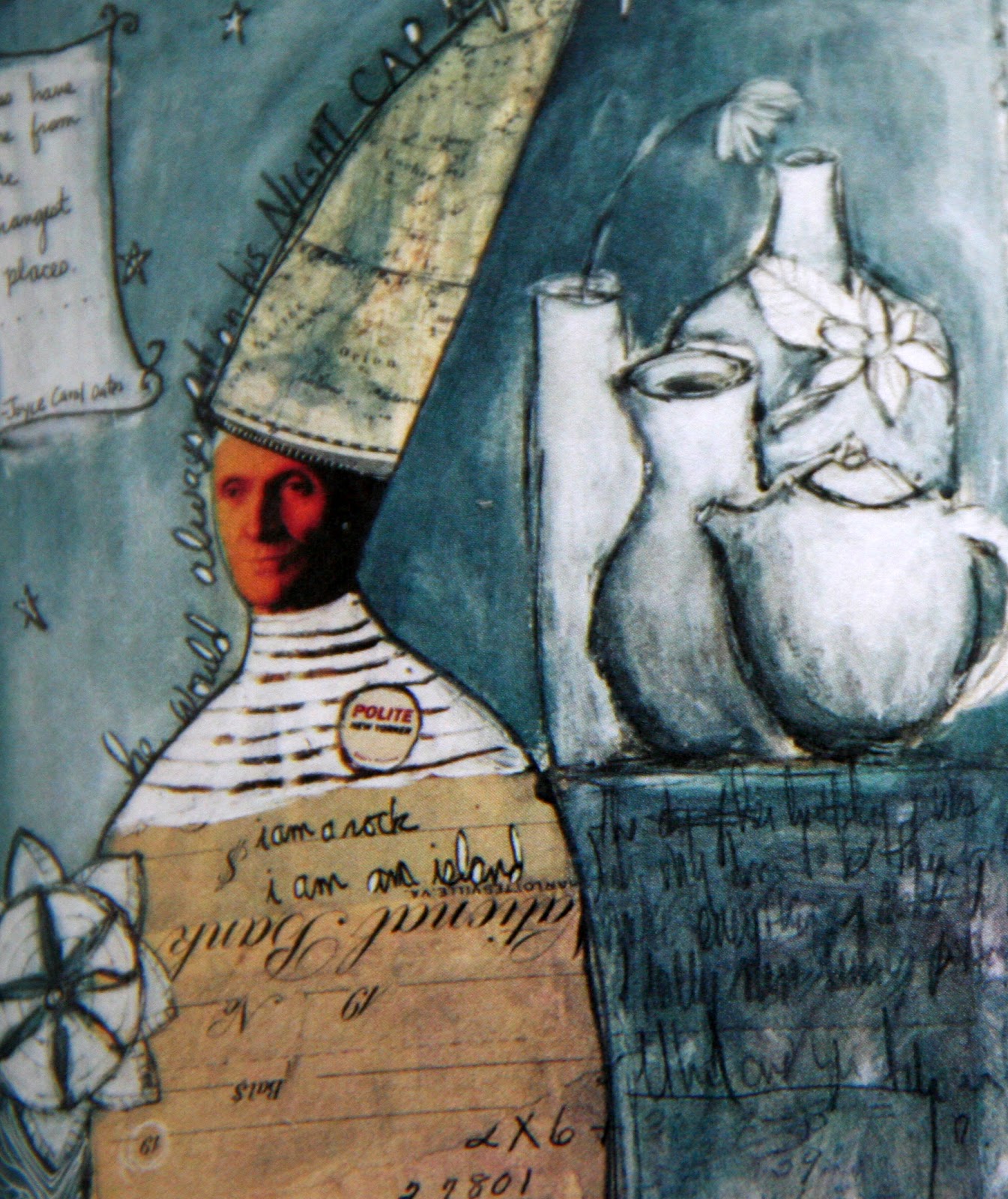
Unfurling, A Mixed-Media Workshop with Misty Mawn: Inspiration and Techniques for Self-Expression through Art. The collages below are examples of her work.  Her work is multi-faceted and so much fun to look at.  I especially enjoy the way she incorporates a still-life into this collage. 


More Mixed-Media Pieces...


Wednesday, November 27, 2013

Advanced Drawing and Painting

Artwork from: From Ordinary to Extraordinary by Ken Vieth
I came across this lesson on another teacher's website (thank you Mrs. Briggs).  It connects with the artists and styles we have been studying.  Start by perusing magazines until you find an image that jumps out at you.  Take a portion of that image and place it in your sketchbook (don't glue it down yet).  Extend the images by creating an interesting composition.  Think of the negative and positive space and how both define your sketch.  Create a few different examples of how you can complete this drawing.  After you have a solid composition and creative idea start planning your color scheme.  What mood are you trying to create?  Use either colored pencil, watercolor, and/or ink (or a combination of all three).  Remember to layer your materials to create depth in your piece.  Be thoughtful, creative, and invest yourself in you work!

Use your time in class today to look for an image you would like to "extend". Print the image out on the phaser printer so you are ready to glue it into your sketchbook the next time we meet.

Thursday, November 21, 2013

Shoreline Arts Trail Nov. 23-24


This weekend head out to the "trail".  The arts trail!  Amazing shoreline artists open their studios to everyone interested in viewing their work. I love to see where an artist works and to meet the artist in person.  So many wonderful works of artists to see see in such a short time.  By the end of the semester you will have to visit an art gallery and do a formal critique of a work of art that you are looking at in person, this weekend is the perfect opportunity to do so. Follow the link below to find out more information. 


Artists James Riccio and John Falato

 Advanced Drawing and Painting


 After having a conversation with painter James Riccio I am reminded how difficult it is to paint with watercolors. Follow the link above to view his work. Years ago I studied watercolor painting with John Falato at Paier College of Art.  It was shockingly hard to paint with watercolors after having some experience painting with oils.  I found myself putting dark values on the paper and not being able to correct my mistake, once it was on the paper it was there for good.  Unlike oils or acrylics you cannot scrape your paint off or paint over an obvious mistake. As our class continues on the path of learning about watercolors, realize that it does take a lot of patience and planning when creating a watercolor painting. 


Monday, November 18, 2013

Intro to Watercolors

Advanced Drawing and Painting

In the next few weeks you should have completed three works of art that utilize watercolor. One representational still-life, one self-portrait or portrait , and one abstract mixed-media.  For details about the requirements review the


Perspective and Perception

Intro to Drawing and Painting

Your next artistic challenge will be to create an acrylic painting that shows your knowledge of perspective. Create the illusion of space by portraying objects and architecture the correct size and proportion.  Choose an architectural or atmospheric space that is intriguing to you and then make a painting that represents that space in your personal way.  You may simplify the details to create an abstract painting or you can try for a realistic rendering. 

View the following Document for more information on this lesson:


The paintings below make an impact by including perspective as a key component to design.