Tuesday, March 26, 2013

Create a NEW World!

Designing for the Web

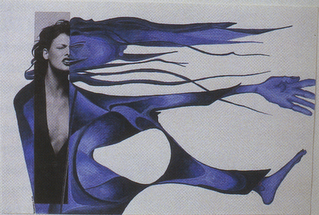
Now that you have completed your research on Surrealism and are familiar with Photoshop, it is time for you to create your own unique work of art.  Your artwork could make a statement about a global issue or you could focus on something more personal.  Some students in the past have created light-hearted works of art and others delve into more somber issues...it is totally up to you.  We will be animating this photoshop image in Flash so think about ways you will add movement and sound in the future.  The images you see below all include the artist...you can be in your art as well. 
Please read the Surrealistic Lesson Document for more details on the assignment.

Jamie G 2011

Walter K 2011

Josh D 2010

Thursday, March 21, 2013

Intro to Surrealism

Designing for the Web

Surrealistic works of art create a dream-like environment. To learn more about this art movement research this intriguing style of art...then start thinking about an image you can create in Photoshop.  Complete the following journal entry on Surrealism and view previous student work for inspiration.


Created by Luke S

Created by Tim O.
Created by Brandon M.

Wednesday, March 20, 2013

Branford Festival T-Shirt Design

Creative Opportunity


Branford Festival is one of the most celebrated events in our town. People of all ages and from all over come to visit our town to participate in the Father's Day Road Race,  listen to music,  and indulge in food made by our local restaurants.  Children love the rides and games, as well as the cotton candy and fried dough!

The event always has a commemorative T-shirt that showcases something in our town.  What comes to mind when you think of Branford and the festival?  Branford is known for it's shoreline and it's green.  Think of ways to represent Branford in a simple way, preferably using a line drawing.   Block in colors, up to six, but you can use a very limited palette if you choose.   View all the guidelines in Branford Festival Document.

Monday, March 18, 2013

Pinch-Pot

Ceramics

Creating a pinch pot is one of the most basic hand-building techniques.  Read the Pinch-Pot hand-out to familiarize yourself with this ancient technique.  Also view the Pinch-Pot video on creating a hollow form by assembling two pinch pots together.  Try to create a pinch pot with walls that are even, you will check to see if they are even by slicing it right down the middle. 


Activist Art

Advanced Drawing and Painting


What political, social, or environmental issue is important to you?
Your next assignment  requires you to communicate a message about an issue you feel strongly about.  Artists have been expressing their views on everything with their art for centuries. Take a look below to see a few examples.

 To view details about getting started view the Activist Art Document


Wednesday, March 13, 2013

Advanced Drawing and Painting

Artwork from: From Ordinary to Extraordinary by Ken Vieth
I came across this lesson on another teacher's website (thank you Mrs. Briggs).  It connects with the artists and styles we have been studying.  Start by perusing magazines until you find an image that jumps out at you.  Take a portion of that image and place it in your sketchbook (don't glue it down yet).  Extend the images by creating an interesting composition.  Think of the negative and positive space and how both define your sketch.  Create a few different examples of how you can complete this drawing.  After you have a solid composition and creative idea start planning your color scheme.  What mood are you trying to create?  Use either colored pencil, watercolor, and/or ink (or a combination of all three).  Remember to layer your materials to create depth in your piece.  Be thoughtful, creative, and invest yourself in you work!

Friday, March 1, 2013

Robert Rauschenberg

Advanced Drawing and Painting


Rauschenberg, a relevant Pop-Artist and Abstract Expressionist, gave us some very unique works of art.  You will be creating an Activist Art piece this semester, it would be beneficial to take a closer look at his work. In your sketchbook write about your reaction to one of the pieces below.  What do you think Rauschenberg is trying to say?  Does his work appeal to your aesthetic?  Look carefully at the materials he uses to create his art.  Describe them.  Discover more about the work of art.  When was it created?  Did the artist reveal what the work was about? Please do some additional research to learn as much as you can about the work of art.  We will discuss your findings in class on Friday March 8th.

Bed
Retroactive 1

Canyon

Factum 11

Rubus

The Art of Critique

Advanced Drawing and Painting

The four steps to critique are describe, analyze, interpret, and judge. 
We will be critiquing our own artwork, as well as, some famous works of art as the semester continues. Artists' style evolve over time and can be influenced by the artwork of others.  Maybe the way you view art will evolve as we begin studying the works of Picasso, Matisse, and Chagall.  Complete the following Journal Entry (below images) to help you better understand the following paintings and the art of critique


In you sketchbook follow the steps to critique a painting by Marc Chagall.  First you must discover the name of the painting and the year it was painted.     
1.   DESCRIBE:  What do you see?  What are the most obvious elements of design? What is going on or what action is taking place?  Elements of Design:  line, texture, shape, color, space,  (there are more, but refer to these)
2.   ANALYZE:  How have the Elements been arranged into Principles? What are the principles doing?  Is there a storyline?  Principles:  Balance, contrast, emphasis, harmony, movement, rhythm, pattern (there are more but refer to these)
3.   INTERPRET:  What are the ideas, emotions or aesthetics being communicated to you? What do you think the meaning of the ART is, what is it trying to say to do or say to you?   Context of Art: Time and Place; Social/Economic/Political/Spiritual Setting; Mood or Emotion qualities; Life and expertise of the Artist.

4.   JUDGE:  Is the art work visually pleasing/aesthetic?Would you say the art achieved its goal for you or the artist?  Is the work well crafted?
(modified excerpts from,  The Art of Seeing”)